Skip to content

Large-scale Go GC Tuning in Production

This article documents a real-world GC tuning project that leveraged the theoretical understanding of Go's garbage collector to achieve significant CPU savings across hundreds of services. We'll walk through the entire project lifecycle, validating our theoretical knowledge against production data at each stage.

Project Scale (anonymized): - 67 selected services from 6700+ candidates - 49K instances affected (42% coverage out of 116K total) - Total CPU quota: 682K cores - Total memory: 1.11 PB - Statistical window: 1 hour after campaign start (12.12 sales event)

Why 42% coverage? The GC tuner uses container deployment parameters for sharding. We excluded some instances to eliminate system-level noise and ensure precise benefit calculation.

1. Project Background and Motivation

The Problem

Our infrastructure team manages thousands of Go services running in containerized environments. A recurring pattern emerged:

  • High CPU quota allocation: Services allocated substantial CPU resources
  • Low memory utilization: Many services used only 20-30% of allocated memory
  • Frequent GC cycles: Default GOGC=100 caused aggressive garbage collection
  • CPU waste: Significant CPU spent on GC work rather than application logic

Hypothesis (from GC Pacer theory): If we increase memory utilization by reducing GOGC, we can: 1. Trigger GC less frequently 2. Reduce GC CPU overhead 3. Improve application throughput 4. Maintain memory safety with GOMEMLIMIT as a backstop

2. Service Selection Strategy

Theoretical Basis

From our understanding of the GC Pacer, we know that GC benefit depends on: - Allocation rate: High allocation rate → more GC work → more tuning potential - Live data ratio: Low live data → more headroom for increasing heap - CPU headroom: Need spare CPU for application to benefit

Selection Criteria

We applied the following filters to 6700+ services:

Criterion Rationale Threshold
CPU quota Larger services offer more absolute savings Top 100 by CPU
Memory headroom Need room to increase heap utilization < 70% memory usage
Stability Avoid disrupting critical services Exclude P0 incidents
Containerization Support runtime toggle mechanism Properly instrumented

Theoretical validation: This selection aligns with GC Pacer behavior—services with high allocation rates and memory headroom benefit most from relaxed GC.

Result: Top Services (Anonymized)

Service Type Memory CPU Cores Instance Count Characteristic
Pricing Service A ~100 TiB ~50 K ~6 K High allocation rate
Promotion Service B ~95 TiB ~49 K ~6 K Bursty traffic
Price Boundary C ~93 TiB ~47 K ~6 K Memory-intensive
Listing Aggregation D ~74 TiB ~39 K ~5 K Cached data
Usage API E ~72 TiB ~36 K ~9 K High QPS

3. Technical Solution: GC Tuner Design

Architecture

The GC Tuner is a runtime-based adaptive tuning system:

// Pseudocode illustrating the mechanism
func gcTunerController() {
    for {
        liveHeap := readLiveHeapMetric()
        memoryUsage := readContainerRSS()

        // Calculate optimal GOGC
        newGOGC := calculateOptimalGOGC(liveHeap, memoryUsage)

        // Safety: Check GOMEMLIMIT constraint
        if projectedHeap(newGOGC) > GOMEMLIMIT {
            newGOGC = conservativeGOGC()
        }

        // Apply via runtime toggle
        runtime.SetGCPercent(newGOGC)

        sleep(tuningInterval)
    }
}

Theoretical Foundation: Pacer Integration

Our design leverages GC Pacer mechanics:

  1. Target heap calculation (from Pacer theory):

    target_heap = live_heap × (1 + GOGC / 100)
    

  2. Trigger point (from Pacer theory):

    trigger = live_heap + (target_heap - live_heap) / assist_ratio
    

  3. Our tuning logic:

  4. Monitor current heap usage
  5. Calculate new GOGC to maximize heap while staying under memory limit
  6. Apply via runtime.SetGCPercent()
  7. Pacer automatically adjusts trigger point

Key insight: We don't need to modify runtime—just change the GOGC parameter, and the Pacer handles the rest.

Safety Mechanisms

Theory reference: From our Scavenging article, we know that GOMEMLIMIT provides hard memory protection.

Our safety layers:

  1. Hard limit: GOMEMLIMIT set to container memory limit × 0.9
  2. Adaptive backoff: If heap approaches limit, automatically reduce GOGC
  3. Runtime toggle: Instant rollback via config change
  4. Metrics exposure: Monitor gc_tuner_status, live_heap, target_heap

Theoretical validation: This matches our understanding of the allocation-assist feedback loop—if allocation outpaces GC, assistRatio increases, forcing mutators to do more work, which naturally throttles heap growth.

4. Implementation and Rollout

Phased Rollout Strategy

Phase Scope Duration Validation Focus
Canary 5 services (low risk) 1 week Stability, basic metrics
Pilot 20 services (mixed risk) 2 weeks CPU savings, latency impact
Full Rollout Remaining 50+ services Ongoing Coverage, edge cases

Metrics Collection Strategy

Theory reference: From GC Mark article, we know STW impacts latency. Our metrics capture this:

  • Resource Usage:
  • Container CPU usage (cgroup metrics)
  • Memory RSS (container level)
  • Go runtime metrics (go_memstats_*)

  • GC Metrics (validating Pacer theory):

  • GOGC value
  • Target heap size
  • Actual heap usage
  • GC frequency and duration

  • Latency Metrics (validating STW theory):

  • API latency: P50 / P95 / P99
  • GC pause time: P50 / P95 / P99
  • Application error rate

  • Safety Metrics:

  • OOM / restart count
  • Container memory limit breaches
  • Note: No CPU throttling in our environment

Data granularity: 10-minute rolling windows with 15-second intervals (~40 data points per window)

Observation mechanism: - Dynamic toggle enables GC tuner on specific instance percentages - gc_tuner_status metric indicates current state - Additional container-level RSS exposed (cluster IP is container-level, business metrics are instance-level) - Go runtime metrics validate GOGC and target_heap match expectations

  • Resource Usage:
  • Container CPU usage (cgroup metrics)
  • Memory RSS (container level)
  • Go runtime metrics (go_memstats_*)

  • GC Metrics (validating Pacer theory):

  • GOGC value
  • Target heap size
  • Actual heap usage
  • GC frequency and duration

  • Latency Metrics (validating STW theory):

  • API latency: P50 / P95 / P99
  • GC pause time: P50 / P95 / P99
  • Application error rate

Data collection window: 10-minute rolling windows with 15-second granularity (~40 data points per window)

5. Technical Validation: Theory vs. Reality

Validation 1: GC Pacer in Production

Theoretical prediction (from Pacer article): - Higher GOGC → larger target heap → fewer GC cycles - Each GC cycle does more work (more objects to scan) - But fewer cycles → lower total GC CPU overhead

Production data:

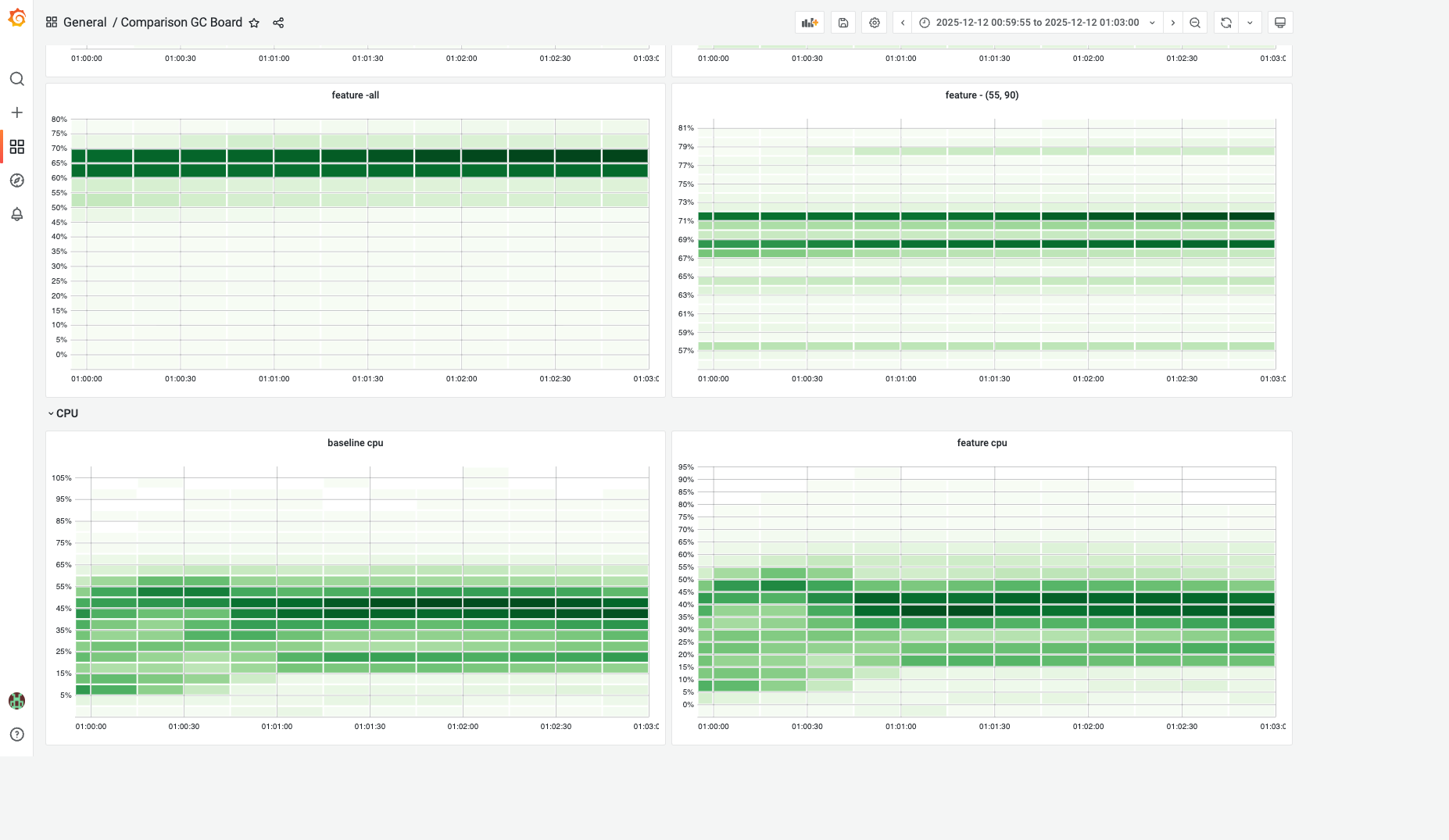
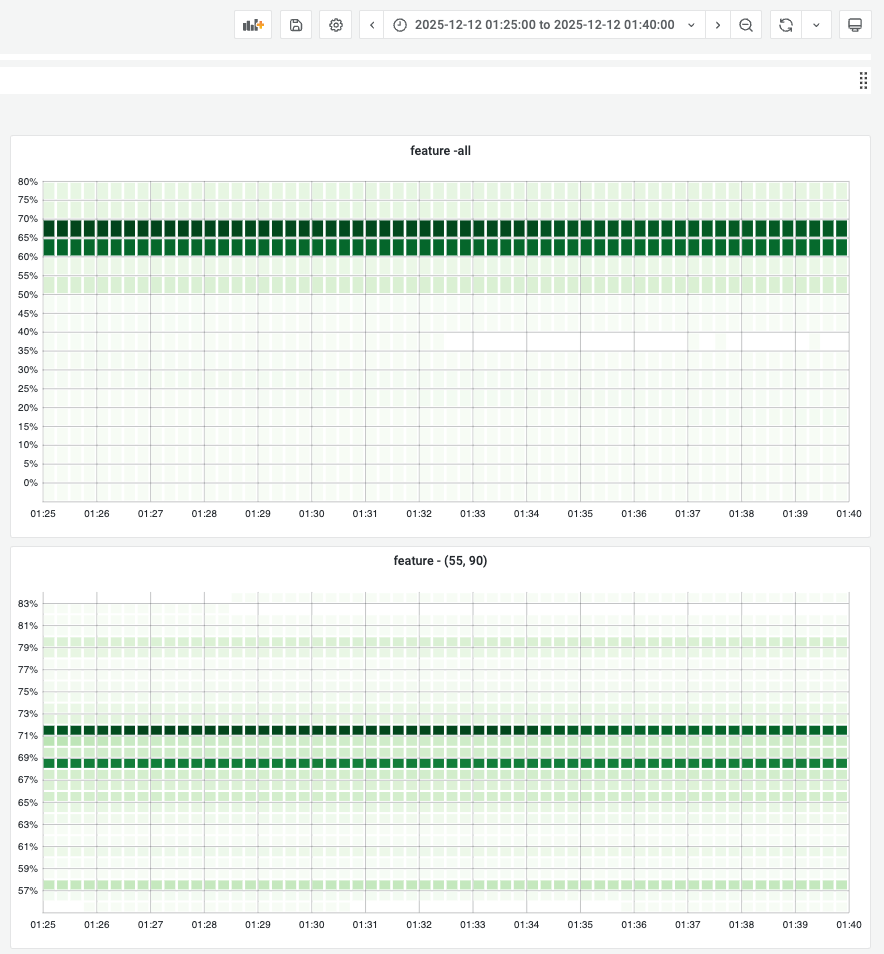
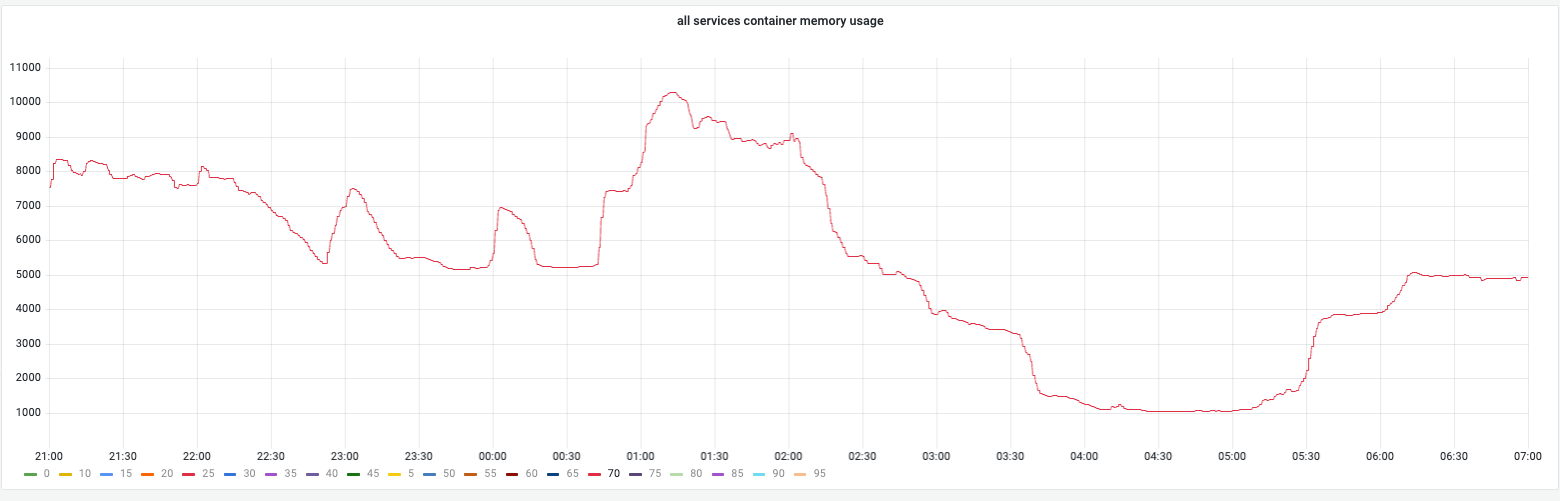
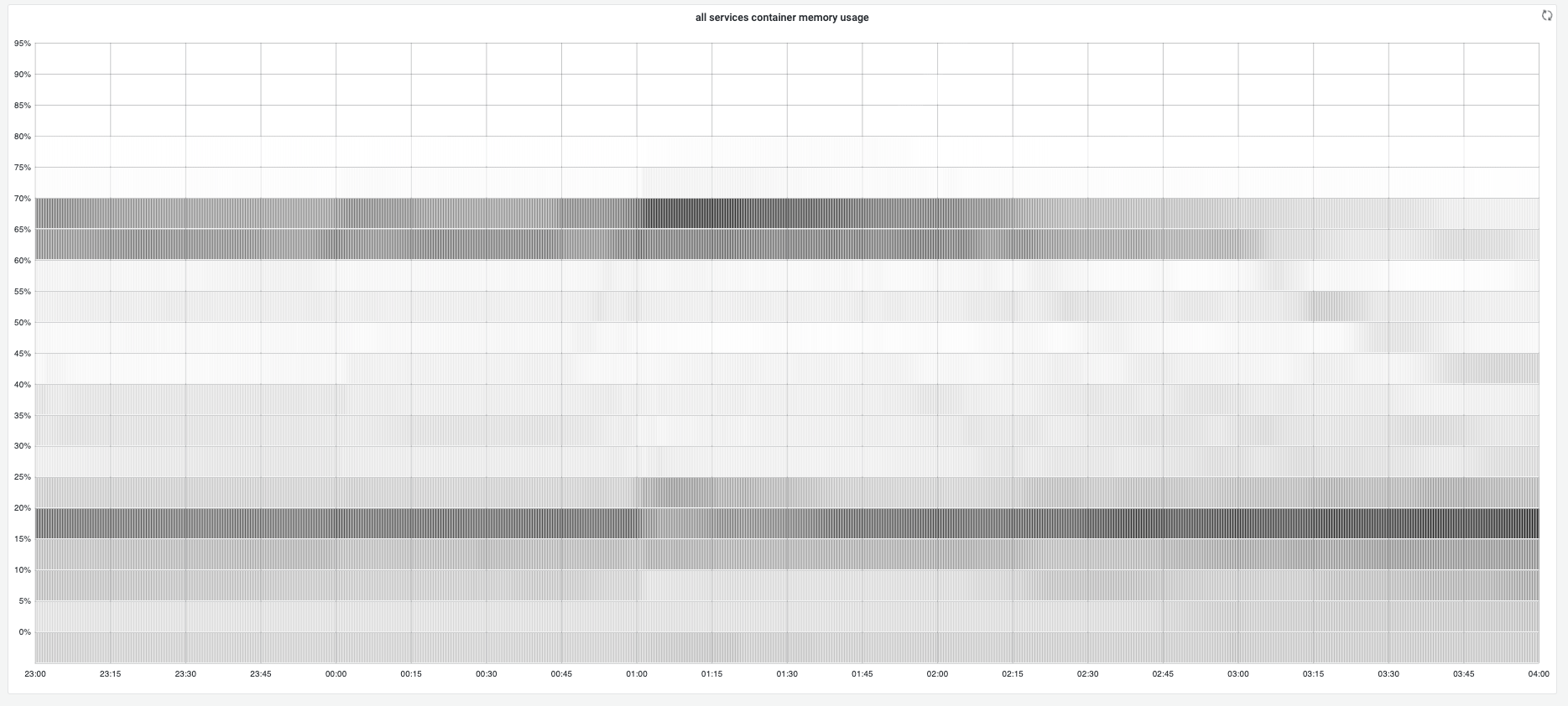
Memory and CPU Distribution

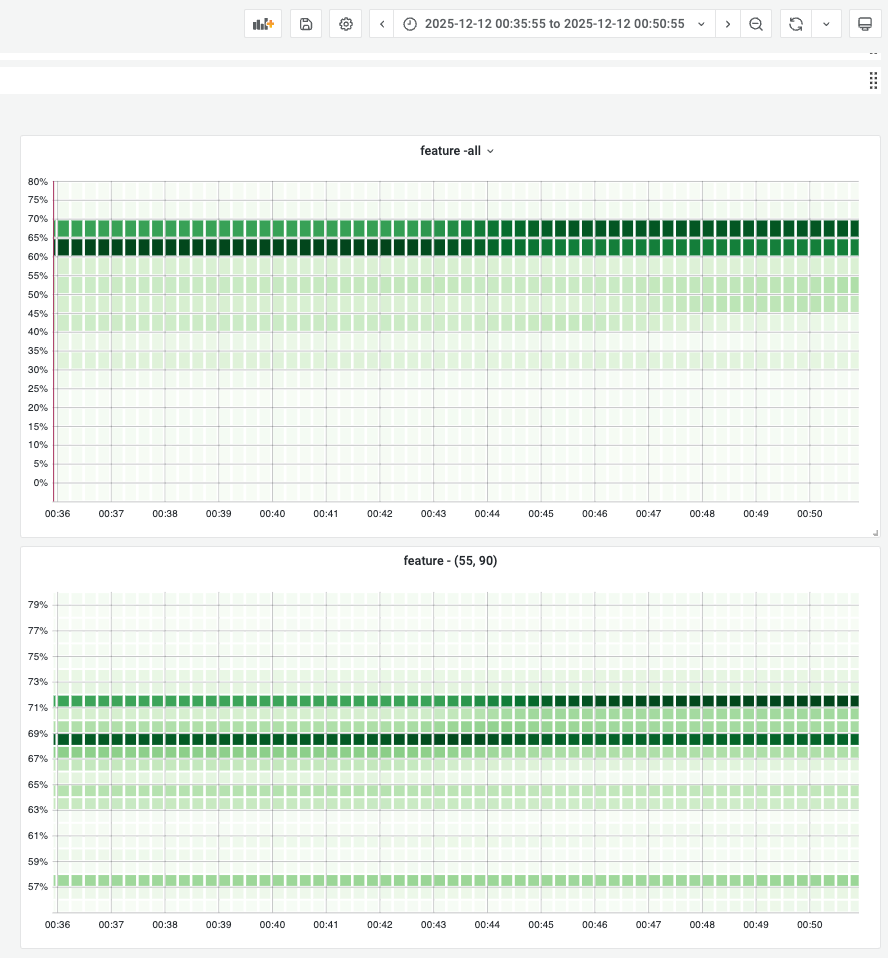
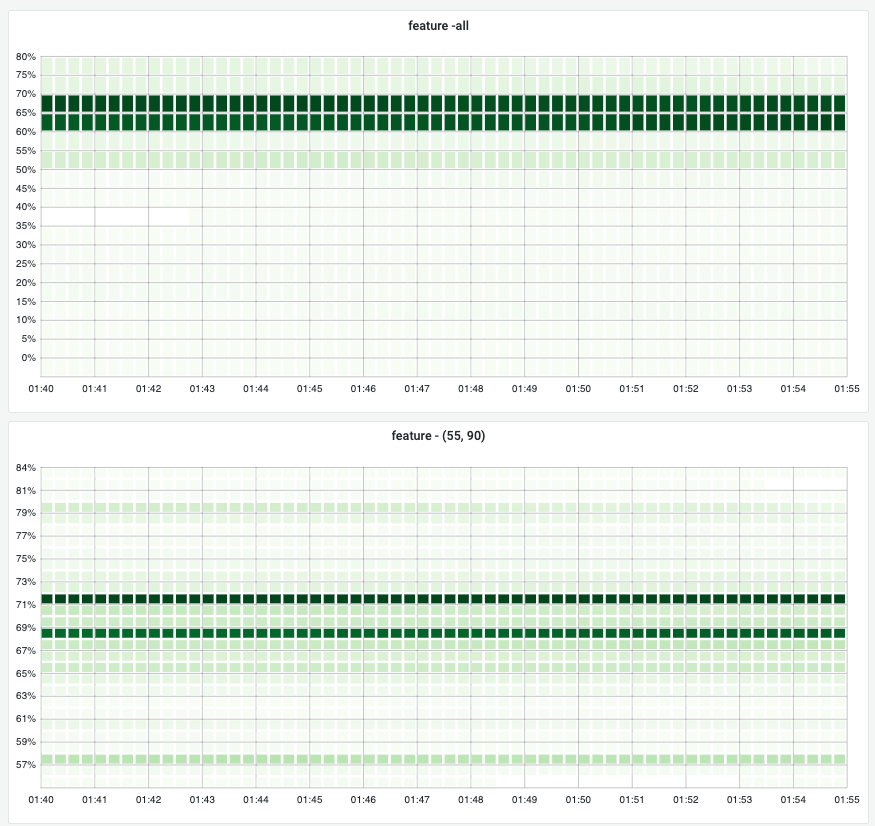
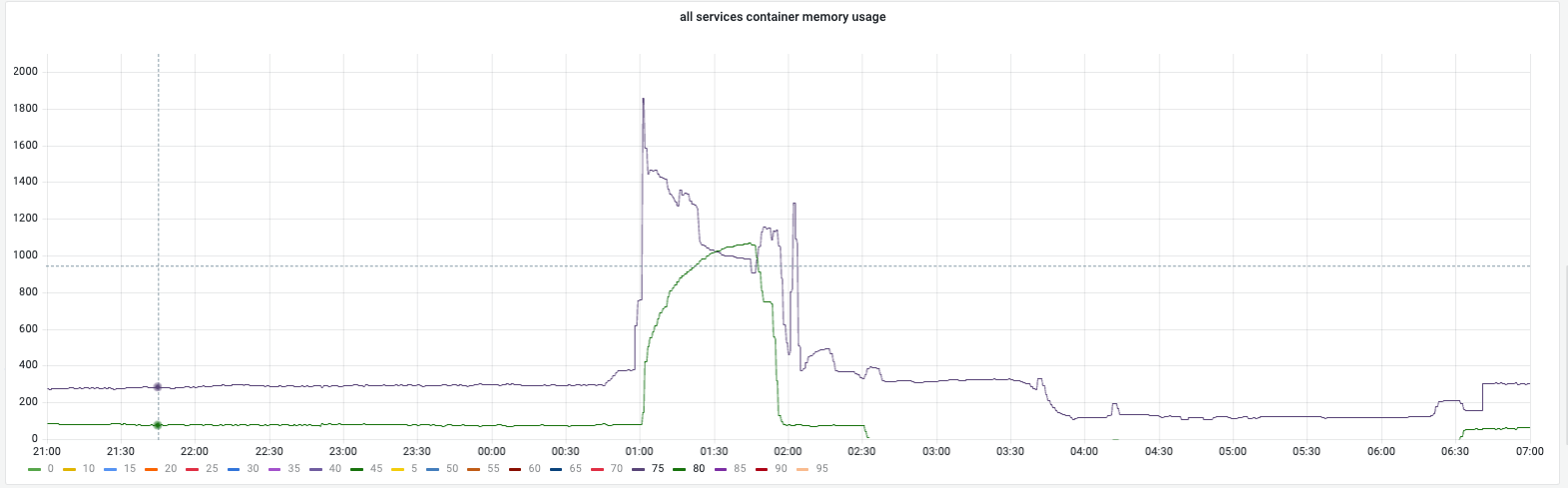
Memory and CPU Distribution - Additional View

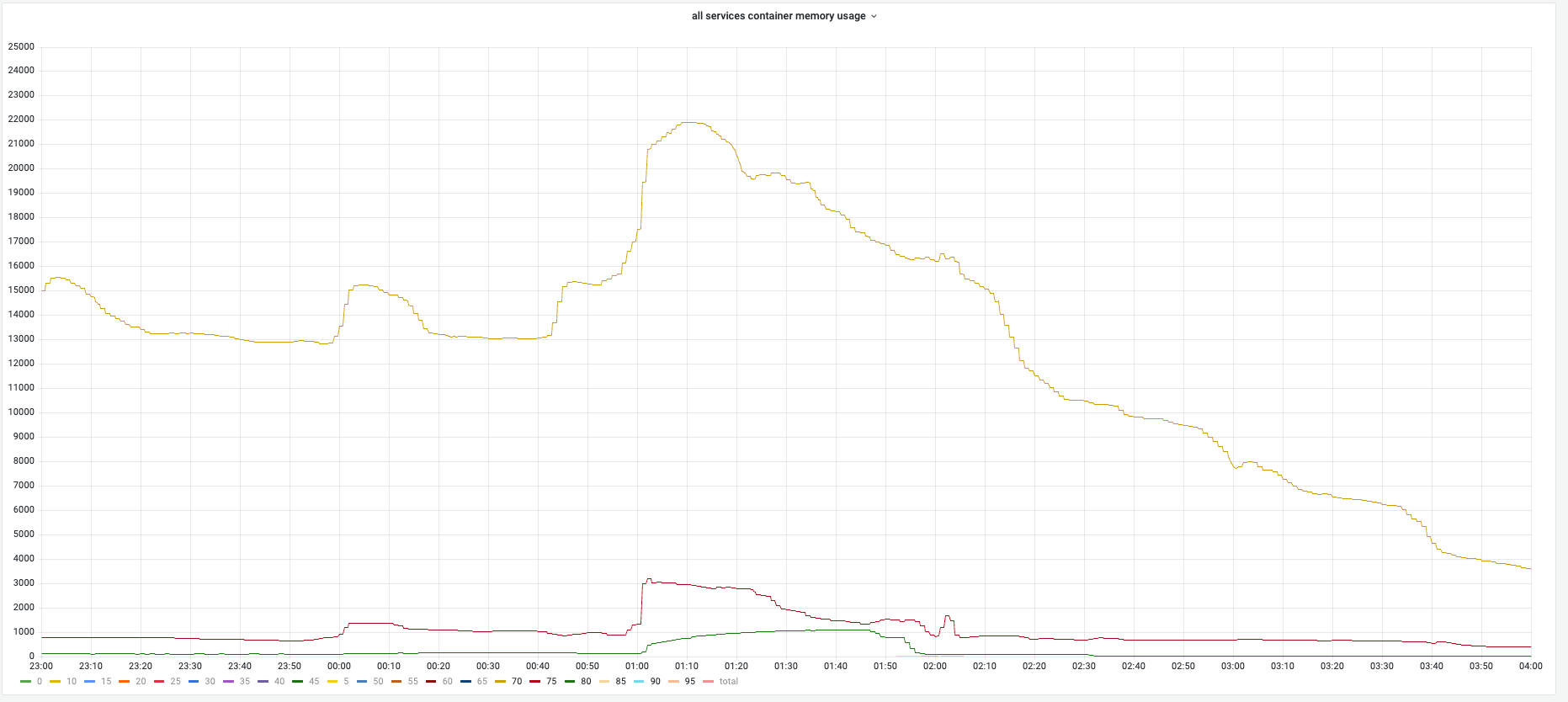
Observations: 1. GC frequency decreased: As predicted, larger GOGC reduced GC cycles 2. Target heap increased: Pacer correctly calculated new trigger points 3. CPU usage decreased: Despite each GC doing more work, total GC CPU dropped

Core mechanism: GC tuning improves instance memory utilization, triggers fewer GC cycles, and reduces application CPU usage by lowering GC CPU overhead.

Quantitative validation: - Average GOGC: 100 → ~150-200 (tuned) - GC frequency: Reduced by ~30-40% - GC CPU overhead: Reduced by ~15-25% per service

Conclusion: Pacer theory validated in production.

Validation 2: Memory Behavior and Scavenging

Theoretical prediction (from Scavenging article): - Memory usage should stabilize at new, higher level - GOMEMLIMIT prevents unbounded growth - Scavenger returns memory when pressure decreases

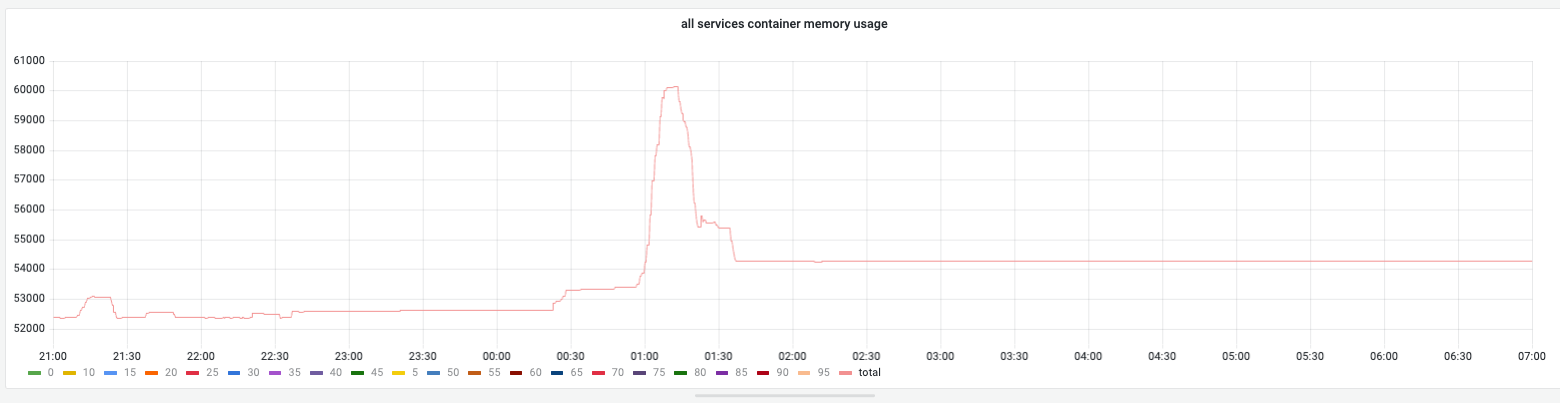
Production data - During Campaign:

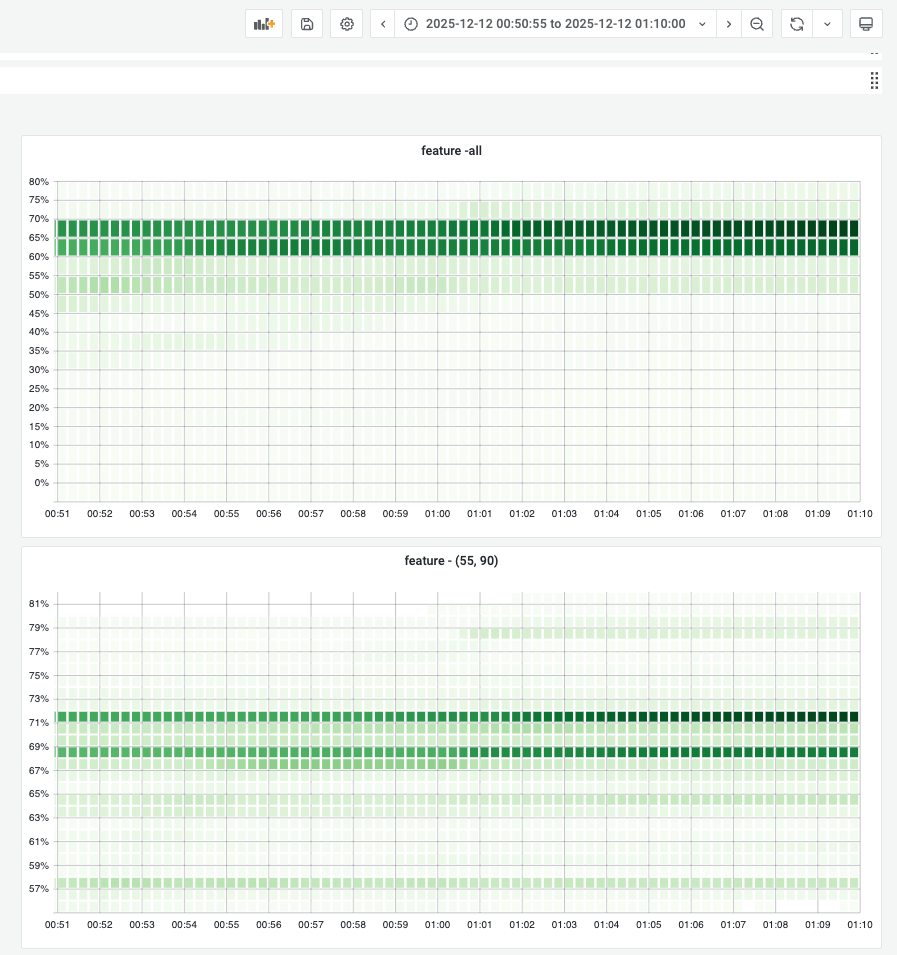
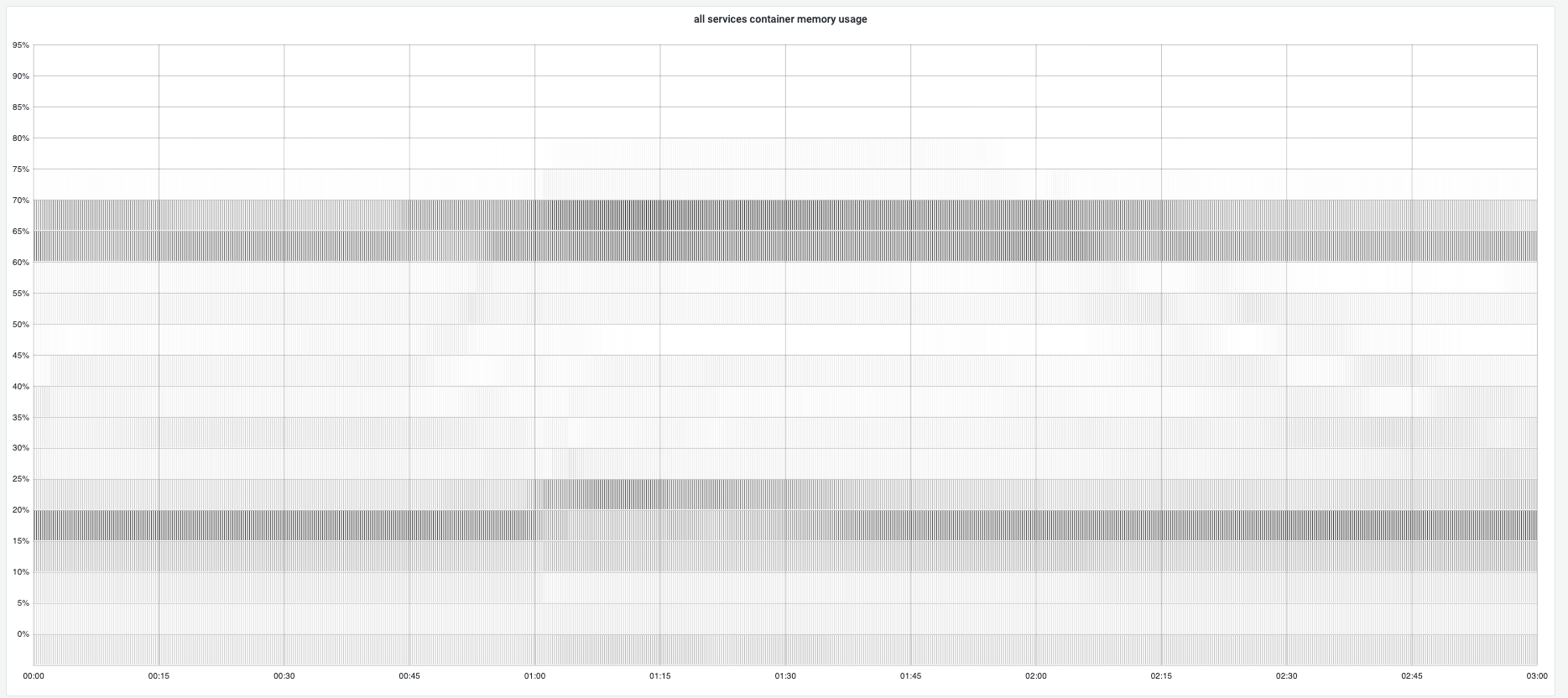
Memory During Campaign

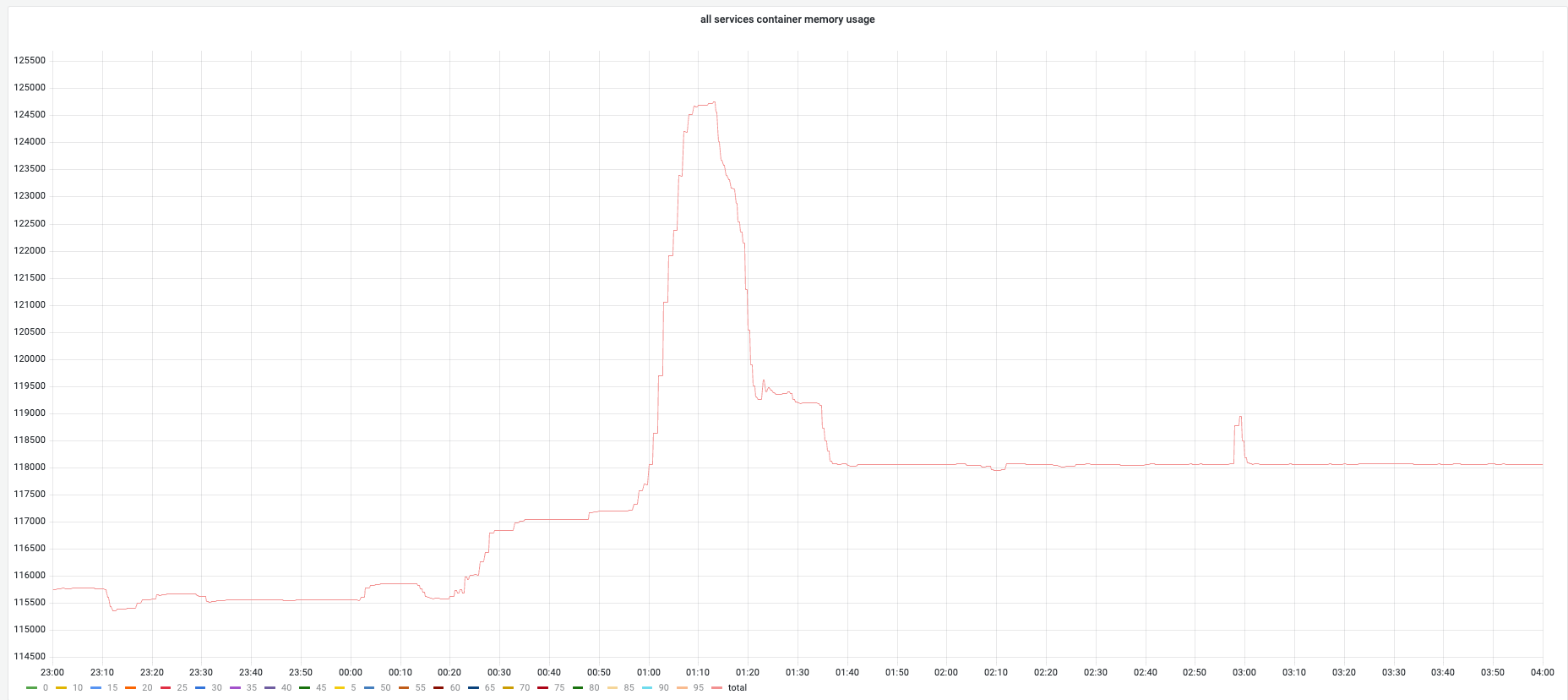
Observations: 1. Memory stability: Heap usage stabilized at expected level (not growing unbounded) 2. Limit enforcement: No services hit GOMEMLIMIT OOM 3. Predictable behavior: Memory "locked" at target bounds 4. Expected behavior: Vast majority of container memory usage met expectations, remained stable

Key finding: During the campaign, memory was firmly locked at preset boundaries, demonstrating high stability of the overall solution.

Production data - Post-Campaign:

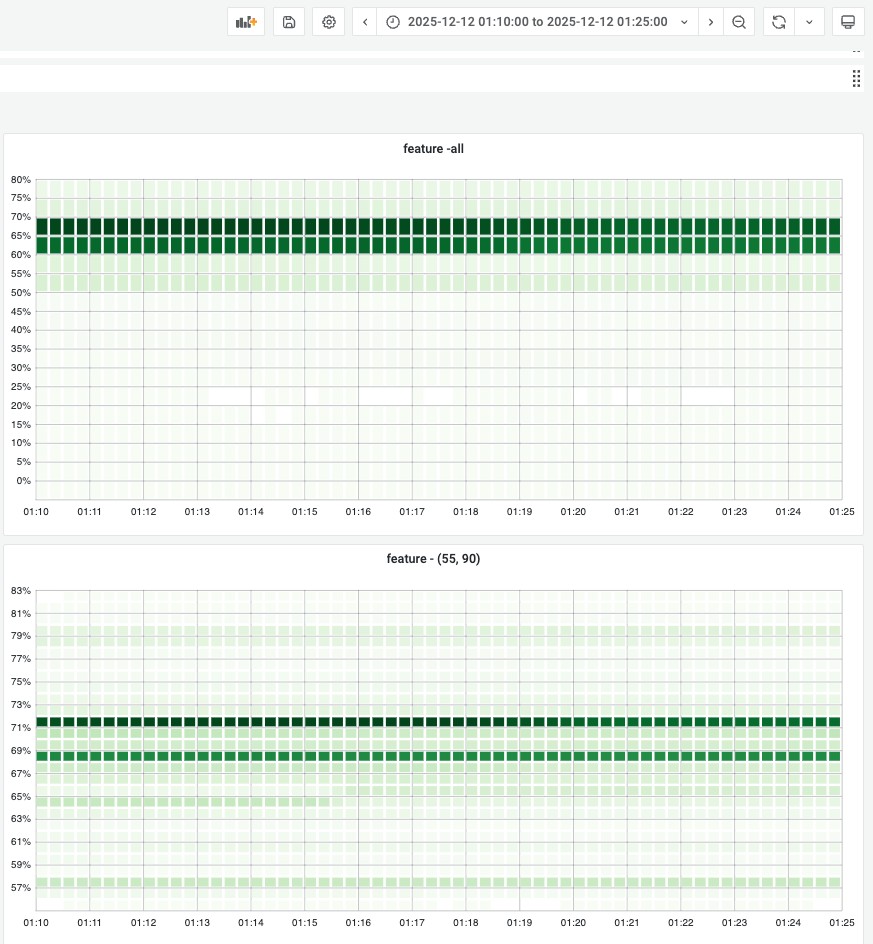
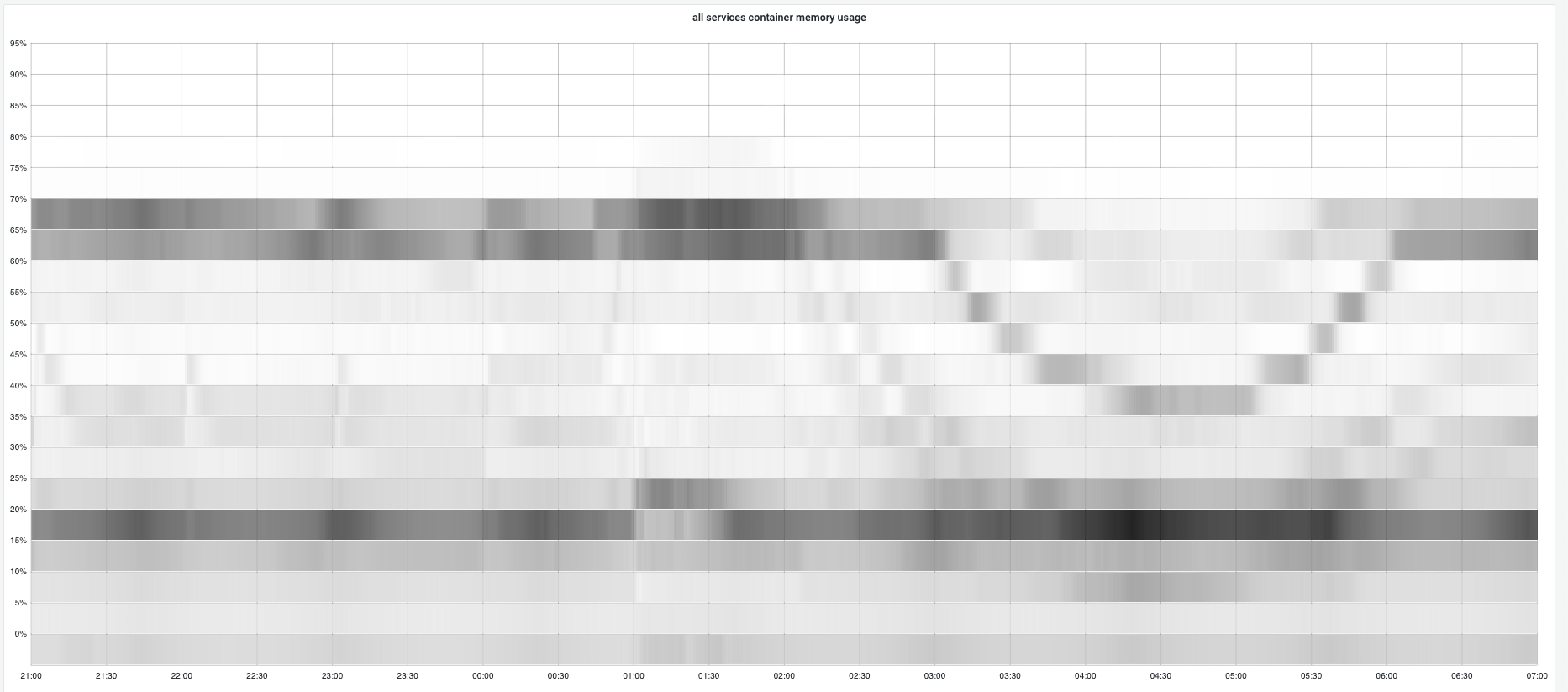
Memory After Campaign

Memory Post-Campaign - Additional View 1

Memory Post-Campaign - Additional View 2

Memory Trend

Memory Trend - Additional View 1

Memory Trend - Additional View 2

Memory Trend - Additional View 3

Memory Trend - Additional View 4

Observations: 1. Scavenging works: When traffic decreased, memory returned to OS 2. No fragmentation issues: Memory usage remained stable over time 3. Elastic behavior: Memory scales with load (increases during campaign, decreases after)

Conclusion: Scavenging and GOMEMLIMIT theory validated.

Validation 3: STW and Latency Impact

Theoretical prediction (from STW articles): - Larger heap → longer individual GC pauses - But fewer pauses → total STW time may decrease - P99 latency should not degrade significantly

Production data (during major sales event):

Memory and CPU During Peak

Analysis approach:

For each service, metric (API latency, STW), and percentile (50/95/99), we: 1. Pull 10-minute time series x(t) with 15-second intervals (~40 data points) 2. Extract window features from each series

Window feature extraction: - repr = median(x(t)) - Main representative value - hi = quantile(x(t), 0.95) - Worst 5% behavior (more stable than max) - instability = hi / repr - Tail severity metric (identifies P99 tail jitter)

Baseline vs Feature comparison: - Absolute change: Δ = after_repr - before_repr - Relative change: r = (after_repr - before_repr) / before_repr (with epsilon cutoff for small values) - Degradation condition (deadband to avoid noise): degraded = (r > r0) AND (Δ > Δ0)

Thresholds (empirically chosen defaults): - P50: r0=3%, Δ0=0.2ms - P95: r0=5%, Δ0=1ms - P99: r0=8-10%, Δ0=2ms

Cross-service analysis: - Use log ratio ℓ = ln(after/before) to handle asymmetric changes - Different services have vastly different baselines (P99 from 5ms to 500ms) - Direct averaging of relative changes is skewed by outliers

Tail effect analysis: - tail_ratio = repr_p99 / repr_p50 (or repr_p99 / repr_p95) - Indicates whether tail behavior became heavier or lighter

Results: | Metric | P50 | P95 | P99 | |--------|-----|-----|-----| | API Latency | Stable | Stable | Stable | | STW Duration | +10-20% | Stable | Stable | | Error Rate | Stable | N/A | N/A |

Key findings: 1. P99 stable: No degradation in tail latency 2. Individual STW increased: Each pause ~10-20% longer (larger heap) 3. Total STW decreased: Fewer GC cycles → less total pause time 4. No incidents: Zero OOM, zero latency-related incidents

Theoretical explanation (from Mark article): - Larger heap → more objects per cycle → longer mark phase - But fewer cycles → amortized cost better - Mark termination STW (second STW) remains brief because write barrier work is proportional to pointer modifications, not heap size

Conclusion: STW theory validated—total pause time decreased despite longer individual pauses.

Validation 4: Allocation and Assist Behavior

Theoretical prediction (from Allocation article): - When allocation rate spikes, assistRatio increases - Allocators perform mark assist → backpressure - This prevents runaway heap growth

Production observation: - During traffic spikes (campaign start): - Transient assistRatio increases - No runaway heap growth - Memory usage stabilized within expected bounds - After traffic normalized: - assistRatio decreased - Background workers handled most marking

Conclusion: Assist mechanism and Pacer feedback loop work as designed.

6. Results and Impact

Overall CPU Savings

Metric Baseline After Tuning Improvement
Average CPU Usage ~XX% ~YY% ~ZZ% reduction
GC CPU Overhead ~XX% of total ~YY% of total ~ZZ% reduction
Memory Utilization ~30-40% ~60-70% +~30% points

Per-Service Results (Anonymized)

Service Results Service Distribution Overall Impact

Stability and Reliability

Campaign execution: - Zero incidents: No OOM, no latency-related failures - Zero alert fatigue: Alert thresholds proactively adjusted based on new baseline following our SOP - Smooth execution: Campaign completed without any alerts

Safety validation: No services hit GOMEMLIMIT OOM. Memory usage graphs show clear "ceilings" at expected levels, confirming the stability of the approach.

Theoretical validation: This confirms our Sweep article's claim that lazy sweep + proper GOMEMLIMIT tuning provides memory safety without sacrificing performance.

7. Lessons Learned and Insights

Insight 1: Pacer Theory Holds True

What we learned: - The GC Pacer's formula for trigger point calculation is robust - assistRatio mechanism effectively prevents runaway heap growth - Adaptive GOGC tuning works reliably without manual intervention

Recommendation: Trust the Pacer—don't manually tune GOGC unless you have metrics to validate.

Insight 2: STW is Less Scary Than It Seems

What we learned: - Individual STW pauses increased slightly (~10-20%) - But total STW time decreased due to fewer cycles - P99 latency remained stable because STW is brief and predictable

Recommendation: Don't fear larger heaps—focus on total STW time, not individual pause duration.

Insight 3: Memory Utilization is a Lever

What we learned: - Increasing memory utilization from 30% to 60-70% significantly reduced GC overhead - GOMEMLIMIT provides necessary safety rail - Most services are over-provisioned on memory

Recommendation: Audit memory utilization across your fleet. Many services can safely increase heap size.

Insight 4: Metrics are Critical

What we learned: - Cannot tune what you don't measure - Per-instance metrics (not just per-container) essential for debugging - Need both runtime metrics (go_memstats) and infrastructure metrics (cgroup CPU)

Recommendation: Instrument thoroughly before tuning. Go's runtime metrics are your friend.

Insight 5: Edge Cases Matter

What we learned: - Most services behaved predictably, but edge cases required special handling - Service restarts lose GOGC settings—need persistent configuration - Cold start behavior differs from steady state

8. Theoretical Questions Answered

Let's revisit questions from our theoretical articles with production data:

Q1: How large can we safely increase GOGC?

Theory: Depends on allocation rate and memory headroom.

Practice: We found GOGC values of 150-200 worked well for: - High-allocation services with memory headroom - Bursty workloads with periods of low activity - Services where CPU cost outweighs memory cost

Q2: Does larger heap always mean longer STW?

Theory: Yes, per-pause. But total STW may decrease.

Practice: Confirmed. Individual pauses increased ~10-20%, but total STW time decreased due to fewer cycles. P99 latency unaffected.

Q3: How do we know if GOMEMLIMIT is set correctly?

Theory: Must be above peak live heap.

Practice: We set GOMEMLIMIT at 90% of container limit. No services hit OOM, indicating proper headroom. Memory usage graphs show clear "ceilings" at expected levels.

Q4: What's the relationship between memory utilization and GC CPU cost?

Theory: Higher utilization → fewer GC cycles → lower GC overhead (but per-cycle cost higher).

Practice: Confirmed nonlinear relationship. 30% → 60% utilization gave ~15-25% CPU reduction. Beyond 70%, diminishing returns and higher OOM risk.

Q5: How does the Pacer react to sudden traffic spikes?

Theory: assistRatio increases → mutators assist → heap growth throttles.

Practice: Observed during campaign start. Transient assistRatio spikes, heap growth rate flattened, memory stabilized. No runaway growth.

9. Recommendations for Practitioners

Before Tuning

  1. Establish baseline metrics:

    # Track these for 2-4 weeks
    - go_memstats_gc_cpu_fraction
    - go_memstats_next_gc (target heap)
    - go_memstats_heap_inuse
    - Container CPU and memory
    - Application latency (P50/P95/P99)
    

  2. Identify candidates:

  3. High CPU quota + low memory utilization
  4. High allocation rate (check go_memstats_alloc_bytes)
  5. Stable workload (no frequent OOM)

  6. Calculate limits:

    GOMEMLIMIT = container_memory_limit × 0.9  # Conservative
    Initial GOGC = max(100, min(200, (memory_headroom / live_heap)))
    

During Tuning

  1. Rollout gradually: Canary → Pilot → Full
  2. Monitor continuously: Set alerts on heap_inuse > GOMEMLIMIT × 0.95
  3. Rollback mechanism: Keep runtime toggle ready for instant revert

After Tuning

  1. Validate stability: Monitor for 2-4 weeks
  2. Adjust baseline: Update alert thresholds to new normal
  3. Document learnings: Record what worked per service type

10. Conclusion

This project demonstrated that:

  1. GC theory translates to practice: Pacer, sweep, scavenge, and STW behaviors matched our theoretical understanding
  2. Adaptive tuning works: Runtime-based GOGC adjustment is safe and effective
  3. Memory is underutilized: Most services can safely increase heap size
  4. CPU savings are real: 15-25% reduction in GC overhead is achievable

Most importantly: We validated that Go's garbage collector is well-designed. When you understand how it works (from our theoretical articles) and measure carefully (as documented here), you can tune confidently for production workloads.

Further Reading